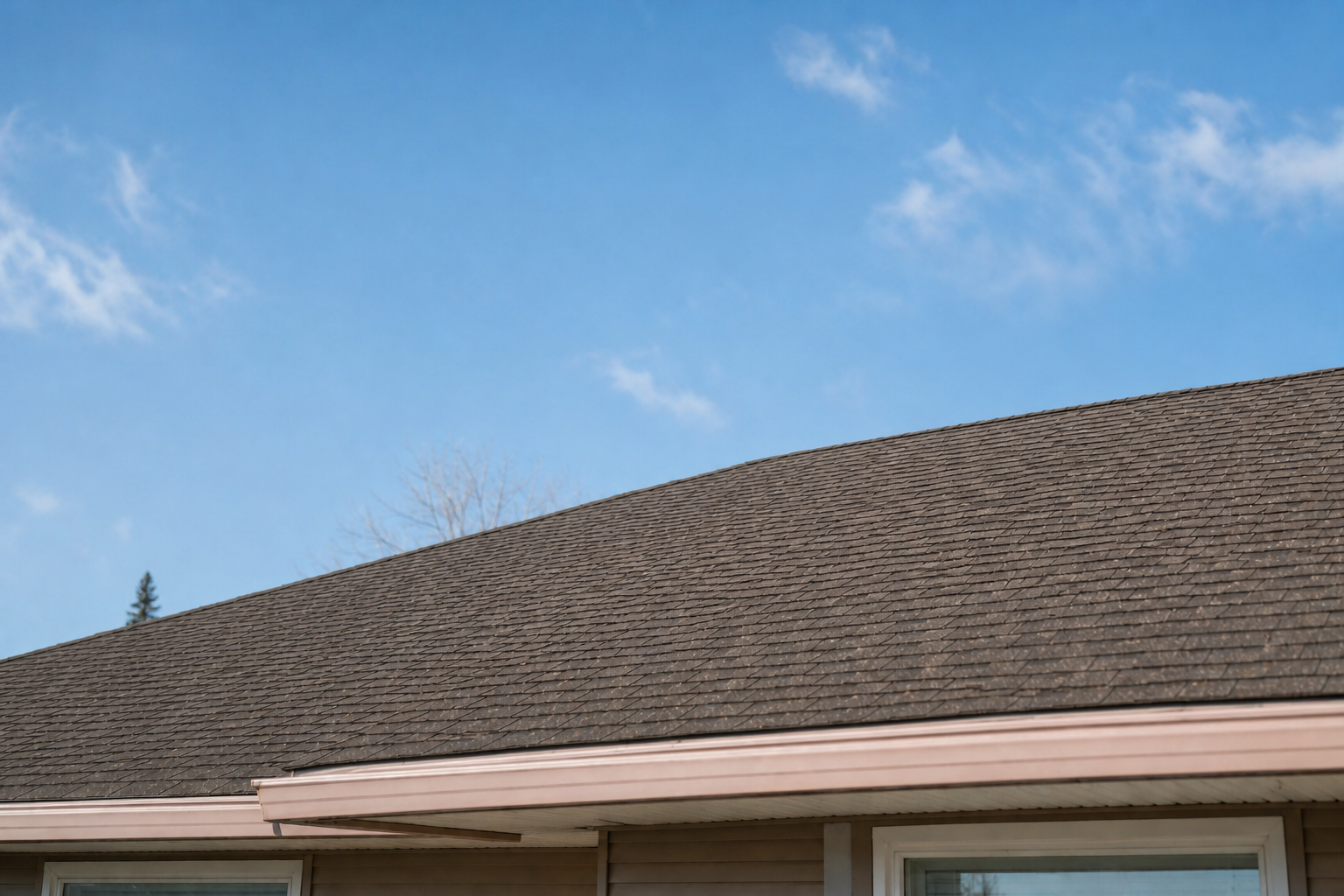
What hail season actually is here
Spring in the Dallas area brings the collision of warm Gulf moisture and cold fronts that produces the region's severe storm activity, and hail is a regular part of that pattern from roughly March through June. Some years bring only a couple of significant events, and other years bring several within a few weeks of each other.
Because storm tracks are narrow, one part of Richardson can take a serious hit while a neighborhood a few miles away sees nothing at all, which is part of why a homeowner should not assume their roof is fine just because a neighbor's was untouched.
A pre-season check that actually helps
Before the season ramps up, a look at the existing condition of the roof establishes a baseline. Any shingle that is already lifted, cracked or missing a seal is far more likely to fail outright in the first hard hit of the year, so catching and fixing those small issues ahead of time reduces the odds of a bigger problem later.
Gutters cleared of debris and downspouts checked for a clear path matter too, since a clogged gutter during a heavy hail-and-rain event backs water up at the eave exactly where a roof is already weakest.
After a storm, what to actually look for
From the ground: dented gutters, downspouts or air conditioning fins, since those materials bruise more visibly than shingle and give a rough sense of hail size that hit the property. Stripped or bruised granules pooling in the gutter or at downspout outlets are another sign worth photographing.
From closer up: soft spots when a shingle is gently pressed, cracked or split shingles, and any granule loss exposing the black mat underneath. None of these need to be assessed alone; a close inspection after a significant storm is the reliable way to know what is actually there.
Impact-resistant shingle, worth considering at replacement
For anyone due for a replacement anyway, a Class 4 impact-rated shingle is worth pricing against a standard architectural shingle. The upfront cost is higher, but the resistance to future hail damage and the potential insurance discount can make the math work out over a few years of North Texas storm seasons.