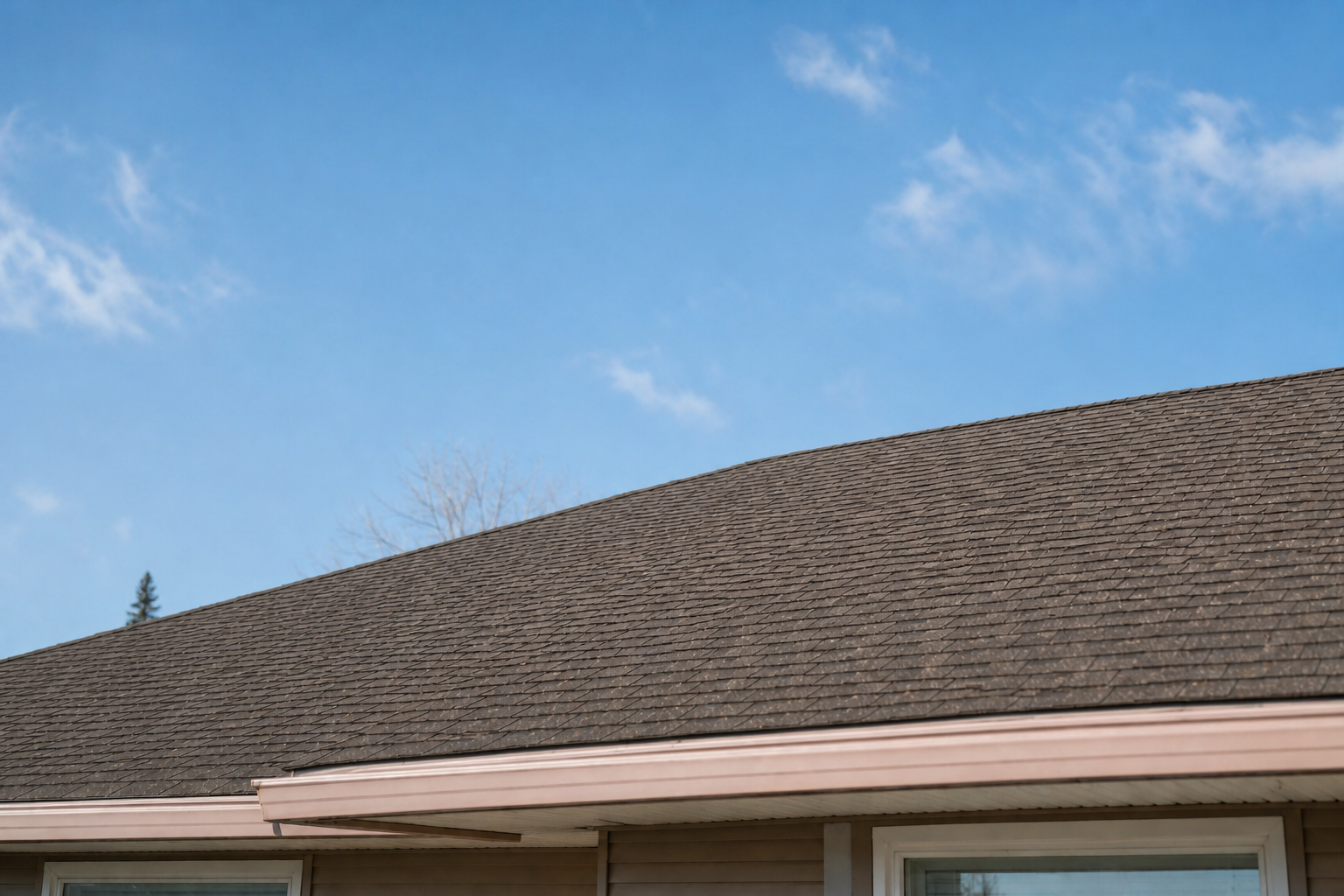
Where roofs actually leak
In a typical year the repair calls from Richardson and Plano homeowners break down roughly the same way: a third are flashing at chimneys, sidewalls and skylights; a quarter are cracked rubber pipe boots that split after ten or so summers in the Texas sun; the rest are wind-lifted shingles, exposed nail heads and blocked valleys.
Almost none of them are a hole punched through the middle of a shingle field. That matters because the wet spot on a ceiling is usually well downhill from where the water actually got in, since it follows the rafters and the underlayment before it shows up inside the house.
Tracking a leak down
The attic gets checked before the roof does. Water stains on the underside of the decking, rust on the exposed nail tips and daylight through a small gap show the path of a leak far more clearly than the shingle surface does from above. Once the likely area is known, the roof is walked with attention to every penetration uphill of the stain.
Where the source is not obvious, a slow garden hose test isolates it: water is run on one section at a time, lowest first, while someone watches from inside. It takes half an hour or so and avoids the common mistake of replacing a chimney flashing when the real problem was a cracked boot several feet away.
The repairs themselves
Pipe boots are replaced with new flashing rather than caulked over, since caulk on a boot is a repair with a shelf life measured in months, not years. Step and counter flashing at chimneys is cut and installed new, with the counter flashing set into a mortar joint rather than glued to the brick face.
Lifted shingles are resealed if the adhesive strip is still intact and replaced if the shingle has creased. A shingle that has taken a hail hit hard enough to crease usually needs replacing even if it has not lifted yet, because the mat underneath is already compromised.
Storm and emergency calls
After a hailstorm or a line of severe thunderstorms with straight-line wind, active leaks are tarped the same day where the weather allows it. The tarp is fastened with battens rather than nails alone, so the next front does not peel it back off. The permanent repair follows within days once the deck has had time to dry.
Photos of the damage are taken before the tarp goes on. Insurance adjusters ask for exactly this kind of record, and a dated photo of hail bruising or a lifted shingle carries more weight than a written description alone.
When repair stops making sense
A reasonable threshold: if the repair would cost more than a fifth of a full replacement and the roof has less than five years of useful life left, replacement is the better use of the money. That judgment is written into the repair note so the homeowner can decide with real numbers in front of them rather than a guess.